Choosing the right Content Management System (CMS) is one of the most crucial decisions when building a business website. Your CMS defines how easily your team can manage, update, and expand your website as your business grows. With so many options available today, understanding how to choose the right one ensures that your digital foundation remains strong and scalable.
What Is a CMS and Why Does It Matter?
A Content Management System (CMS) is a platform that allows users to create, manage, and publish digital content without advanced technical knowledge. In essence, it simplifies website control for businesses, helping them focus on strategy rather than coding.
Why Your Business Needs a CMS
- Ease of management: Enables quick updates without depending on developers.
- Design consistency: Ensures a unified look across pages and content.
- Collaboration: Allows multiple team members to contribute simultaneously.
- Scalability: Adapts to your growing content and feature needs.
A reliable CMS enhances efficiency, improves brand consistency, and supports your marketing and SEO efforts seamlessly.
Types of CMS Platforms
Understanding the main categories of CMS platforms helps you choose the one that aligns with your business structure and goals.
1. Open-Source CMS
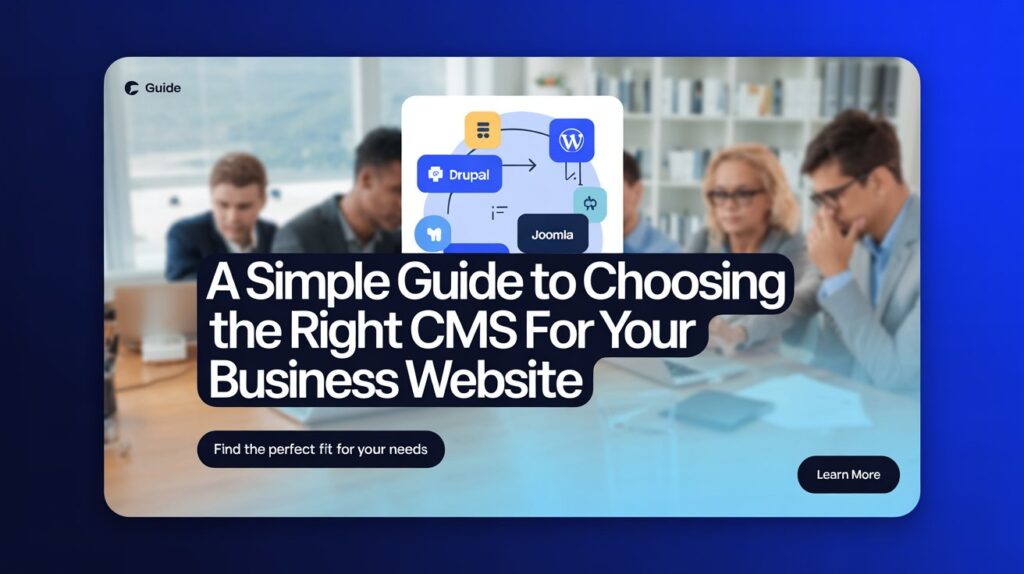
Examples: WordPress, Joomla, Drupal
- Free and highly customizable.
- Great for businesses seeking full control over design and functionality.
- Requires basic technical understanding for maintenance.
2. Proprietary (Hosted) CMS
Examples: Wix, Squarespace, Shopify
- Managed by a provider with built-in hosting.
- Easy to set up and ideal for small businesses.
- Limited customization options compared to open-source systems.
3. Headless CMS
Examples: Contentful, Strapi, Sanity
- Separates back-end content from front-end design.
- Perfect for publishing across multiple channels (web, app, etc.).
- Requires developer integration but offers great flexibility.
Key Factors to Consider Before Choosing a CMS
1. Ease of Use
The CMS should have a simple dashboard and visual editor. A user-friendly interface enables your team to manage content efficiently and make updates quickly.
2. Customization and Flexibility
Opt for a CMS that supports plugins, templates, and design extensions. Flexibility ensures your website evolves with your marketing and branding needs.
3. SEO Capabilities
An SEO-friendly CMS should support clean URLs, fast page loads, and meta tag customization. For instance, WordPress offers plugins like Yoast SEO that help optimize your pages effectively.
4. Security
Security must be a top priority. Look for platforms that provide SSL integration, two-factor authentication, and regular security updates. This protects both your business data and customer information.
5. Scalability
As your content and user base grow, your CMS should handle the additional load smoothly. A scalable CMS ensures long-term stability and performance.
6. Support and Community
A CMS with a strong support team or active community helps resolve technical issues faster and offers a steady stream of updates and resources.
Popular CMS Options for Business Websites
1. WordPress
- Powers over 40% of websites globally.
- Open-source, flexible, and user-friendly.
- Offers thousands of plugins for SEO, analytics, and design customization.
2. Shopify
- Ideal for e-commerce businesses.
- Provides integrated payment solutions and reliable hosting.
- Excellent customer support and an intuitive interface.
3. Wix
- Best for startups and small businesses.
- Simple drag-and-drop builder with pre-designed templates.
- Limited in flexibility but easy to launch quickly.
4. Joomla and Drupal
- Suitable for developers and large-scale organizations.
- Highly customizable and secure.
- Require more technical expertise but offer excellent scalability.
Common Mistakes to Avoid
- Neglecting scalability: Many businesses choose a CMS that can’t grow with their operations.
- Ignoring SEO compatibility: Without SEO-friendly tools, ranking on search engines becomes challenging.
- Overlooking security updates: Failing to maintain a CMS can expose vulnerabilities.
- Choosing based on popularity: Select a CMS that matches your needs, not just what’s trending.
Conclusion
Selecting the right CMS requires balancing usability, flexibility, and long-term growth potential. A well-chosen CMS helps streamline operations, enhance your online visibility, and strengthen your digital presence. By considering your business goals and technical capacity, you can invest in a platform that supports both your current and future website needs.
FAQs
1. What is the most beginner-friendly CMS?
WordPress and Wix are ideal for beginners due to their intuitive interfaces and extensive support resources.
2. Which CMS is best for online stores?
Shopify and WooCommerce are the best choices for e-commerce websites, offering secure transactions and robust product management features.
3. How can a CMS improve SEO performance?
A CMS with SEO plugins, structured data support, and fast load times helps your site rank higher and attract more visitors.
4. Can I migrate from one CMS to another later?
Yes, but migration can be time-consuming. It’s best to evaluate your long-term needs before making the initial choice.
5. Do all CMS platforms require coding skills?
Not necessarily. Platforms like Wix and WordPress allow you to manage content easily without any coding knowledge.