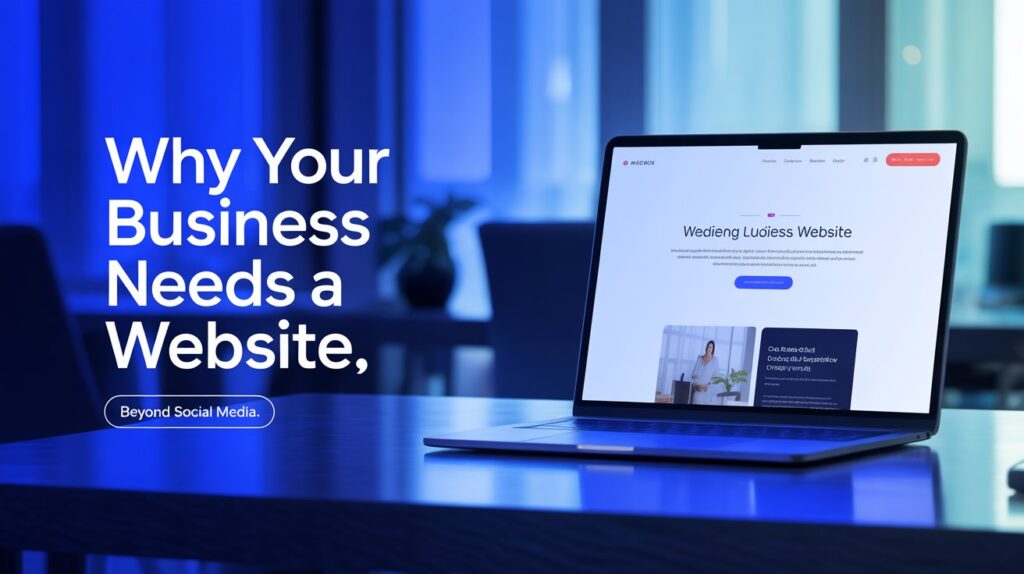
In today’s digital era, having a strong online presence is crucial for business success. While social media platforms offer immense reach and engagement, relying solely on them can limit your brand’s potential. A dedicated website not only establishes credibility but also provides a platform for growth, control, and customer interaction that social media alone cannot achieve.
The Limitations of Social Media for Businesses
Lack of Ownership and Control
Social media platforms are third-party spaces, meaning businesses do not fully own their audience or content. Platforms can change algorithms, policies, or even shut down accounts, impacting visibility and reach. A website, however, is entirely under your control, allowing businesses to present content, offers, and branding exactly as intended.
Restricted Branding Opportunities
While social media profiles allow for some branding, they offer limited customization. A website provides complete freedom to design a professional look, showcase products, and reflect your brand’s unique identity. This helps in creating a consistent brand image that resonates with your target audience.
Limited Analytics and Customer Insights
Social media analytics are often restricted to platform-specific metrics. In contrast, websites can integrate comprehensive analytics tools, providing detailed insights into visitor behavior, conversion rates, and content performance. These insights enable businesses to make data-driven decisions that optimize their marketing strategies.
Advantages of Having a Business Website
Increased Credibility and Trust
A professionally designed website signals legitimacy and professionalism. Customers are more likely to trust a business that has a dedicated online presence rather than relying solely on social media pages. A website allows showcasing testimonials, case studies, and portfolio work that enhances credibility.
Enhanced SEO and Visibility
Websites can be optimized for search engines, increasing the likelihood of being discovered by potential customers actively searching for products or services. Unlike social media, which relies on platform algorithms, a website enables businesses to control search visibility through effective SEO practices.
Direct Communication and Conversion Opportunities
A website offers multiple ways to engage visitors, including contact forms, live chats, newsletters, and product pages. This direct interaction fosters stronger customer relationships and facilitates conversions. Social media links can drive traffic, but a website converts that traffic into tangible business results.
Longevity and Sustainability
Social media trends and platforms evolve rapidly. A website provides a stable digital foundation that remains consistent over time. Investing in a website ensures a long-term online presence that is adaptable to future marketing strategies.
How to Integrate Social Media With Your Website
While a website is essential, social media still plays a complementary role. Embedding social feeds, social share buttons, and promotional campaigns on your website can enhance engagement. This integrated approach maximizes reach while maintaining control over your brand’s digital environment.
Conclusion
While social media is a powerful marketing tool, it cannot replace the advantages of having a dedicated website. A business website offers credibility, control, data insights, and long-term growth potential. For businesses aiming to thrive in the digital landscape, investing in a website is no longer optional but essential.
FAQs
1. Can social media alone sustain a business online?
Social media can boost visibility and engagement, but relying solely on it limits control, branding, and customer data access, making it insufficient for long-term growth.
2. How does a website improve business credibility?
A professional website demonstrates legitimacy, showcases testimonials, portfolios, and provides a controlled platform to represent your brand professionally.
3. Is it expensive to maintain a business website?
Websites come in various sizes and budgets. With modern tools, even small businesses can maintain professional websites affordably.
4. Can social media and a website work together?
Absolutely. Social media drives traffic to your website, while the website converts visitors into leads or customers, creating a complementary marketing ecosystem.
5. How does a website help in SEO compared to social media?
A website allows full control over SEO strategies, including content optimization, keyword targeting, and backlinking, enhancing visibility on search engines.