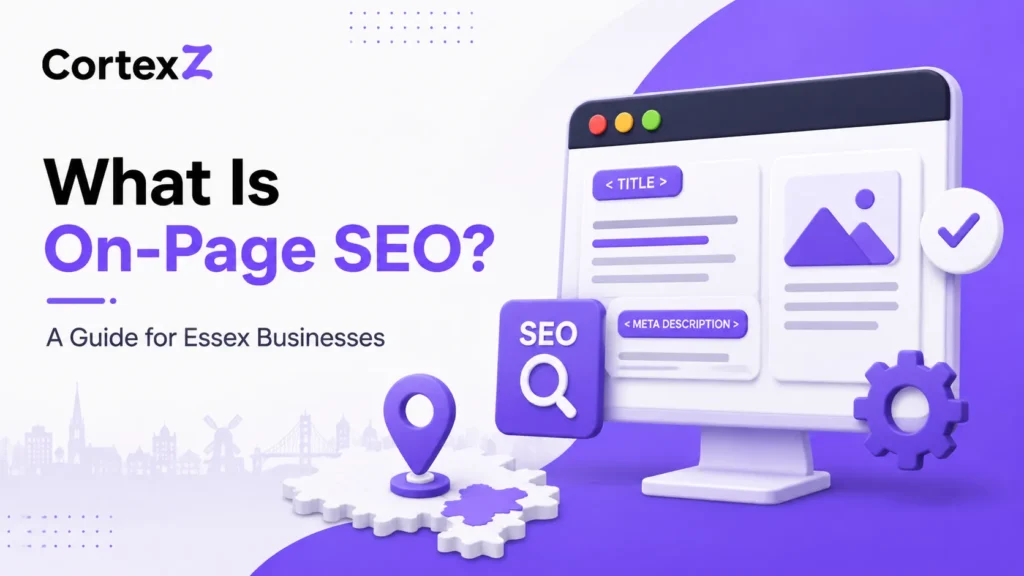
If you have started learning about SEO, you have probably come across the term “on-page SEO.” It sounds technical, but the idea behind it is simple. On-page SEO is about making the pages on your website easier for search engines and visitors to understand.
For Essex businesses trying to rank higher on Google, on-page SEO is one of the most important places to start. In this guide, we will explain what on-page SEO is, why it matters, and how you can use it to improve your website’s performance.
What Does On-Page SEO Mean?
On-page SEO refers to everything you can control directly on your website to help it rank better. This includes your content, headings, images, page speed, and overall structure. It is different from off-page SEO, which focuses on things like backlinks from other websites.
In simple terms, on-page SEO is about making each page on your site as clear, useful, and search-friendly as possible. When done well, it helps search engines understand what your page is about and helps visitors find what they are looking for.
Why On-Page SEO Matters for Essex Businesses
Essex has a competitive local market, with businesses in almost every industry trying to reach the same customers. On-page SEO helps your website stand out by making sure it matches what people are actually searching for.
Without strong on-page SEO, even a great business can struggle to be found online. Search engines rely on the signals within your pages to decide how relevant your website is for a specific search. If those signals are weak or missing, your rankings will suffer, no matter how good your products or services are.
Key Elements of On-Page SEO
Title Tags and Meta Descriptions
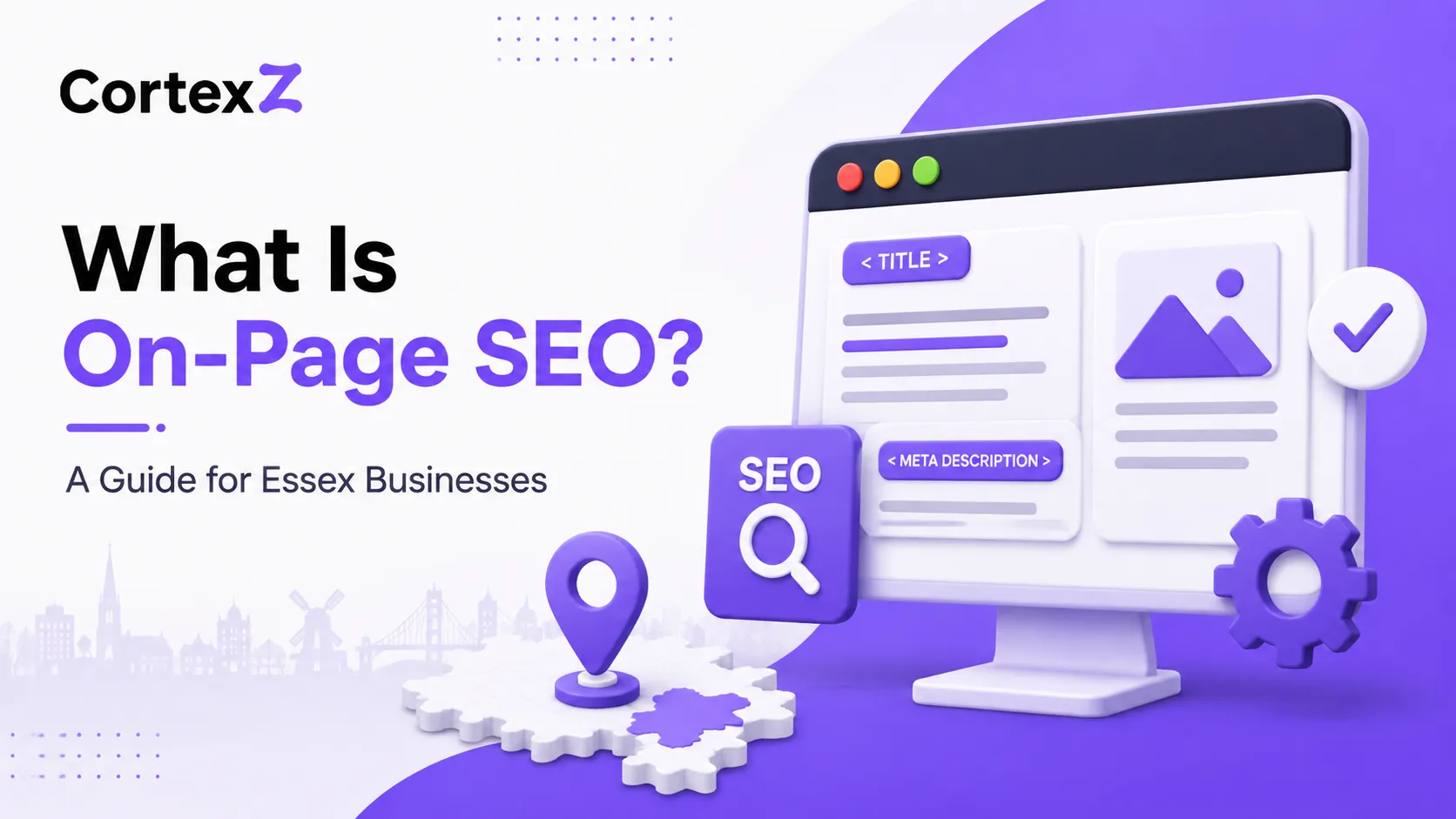
Your title tag is the headline that shows up in search results. Your meta description is the short summary underneath it. Both should be clear, relevant, and include the keywords your customers are searching for.
Headings and Content Structure
Using clear headings, like H1, H2, and H3 tags, helps organise your content. This makes it easier for both readers and search engines to understand your page. Well-structured content also keeps visitors on your page longer, which can improve your rankings.
Keyword Usage
Your content should naturally include the keywords your customers use when searching. Avoid stuffing keywords unnaturally. Instead, focus on writing content that answers real questions in a clear and helpful way.
Website Speed and Performance
A slow website can hurt your rankings and frustrate visitors. Search engines favour websites that load quickly and work well on both desktop and mobile devices. This is why choosing the right technology matters, including the content management system your website runs on.
Internal Linking
Linking between related pages on your own website helps search engines understand how your content connects. It also helps visitors explore more of your site, which can lead to more conversions.
Image Optimisation
Images should be compressed for fast loading and labelled with clear file names and alt text. This helps search engines understand what the image shows, which can also improve accessibility for visitors using screen readers.
How Website Development Supports On-Page SEO
On-page SEO is not only about writing good content. It also depends on how your website is built. A poorly coded website can slow down loading times, create broken links, or make it harder for search engines to crawl your pages properly.
This is why strong web development capabilities play such a big role in SEO success. A well-built website gives your on-page SEO efforts a solid foundation to work from.
The Role of Website Design in On-Page SEO
Good design is not just about looking nice. It also affects how easily visitors can navigate your site and find what they need. Clear layouts, easy-to-read fonts, and simple navigation all support a better user experience, which search engines take into account.
Working with a team that understands web design services built around usability can make a real difference in how your website performs, both for visitors and for search rankings.
On-Page SEO for Online Stores
If your Essex business sells products online, on-page SEO becomes even more important. Product pages need clear titles, detailed descriptions, and fast loading times to rank well and convert visitors into customers.
Businesses running online stores often benefit from combining SEO with strong software and e-commerce solutions that are built to support both performance and search visibility.
How Branding Connects to On-Page SEO
Your website’s branding also plays a role in on-page SEO. Consistent colours, clear messaging, and a recognisable identity help build trust with visitors, which can lead to longer visit times and more conversions. These signals can indirectly support your SEO performance over time.
If you want to strengthen this side of your website, it helps to understand how you can boost brand identity and conversions as part of your overall strategy.
Common On-Page SEO Mistakes to Avoid
Many businesses make small mistakes that hold back their on-page SEO results. Some of the most common include:
- Using the same title tag or meta description on multiple pages
- Writing content that does not match what customers are searching for
- Ignoring mobile-friendliness
- Skipping alt text on images
- Overusing keywords in an unnatural way
Fixing these issues can lead to noticeable improvements in your search rankings.
Getting Started with On-Page SEO
On-page SEO does not need to be complicated. Start by reviewing your most important pages, checking your titles, headings, and content, and making sure your website loads quickly and works well on mobile devices. Small improvements can add up to big results over time.
Frequently Asked Questions
1. What is the difference between on-page and off-page SEO?
On-page SEO focuses on elements you control directly on your website, like content and structure. Off-page SEO involves outside factors, such as backlinks from other websites.
2. How long does it take to see results from on-page SEO?
Some improvements can show results within a few weeks, but full results usually take a few months, especially for competitive keywords.
3. Do I need technical skills to improve on-page SEO?
Basic improvements, like updating titles and content, do not require technical skills. However, more advanced changes, like improving site speed, often benefit from professional support.
4. How many keywords should I use on one page?
Focus on one main keyword and a few related terms per page. Using too many keywords on one page can confuse both readers and search engines.
5. Can on-page SEO improve my Google rankings on its own?
On-page SEO is an important part of ranking well, but it works best when combined with other strategies, such as strong website performance and quality backlinks.