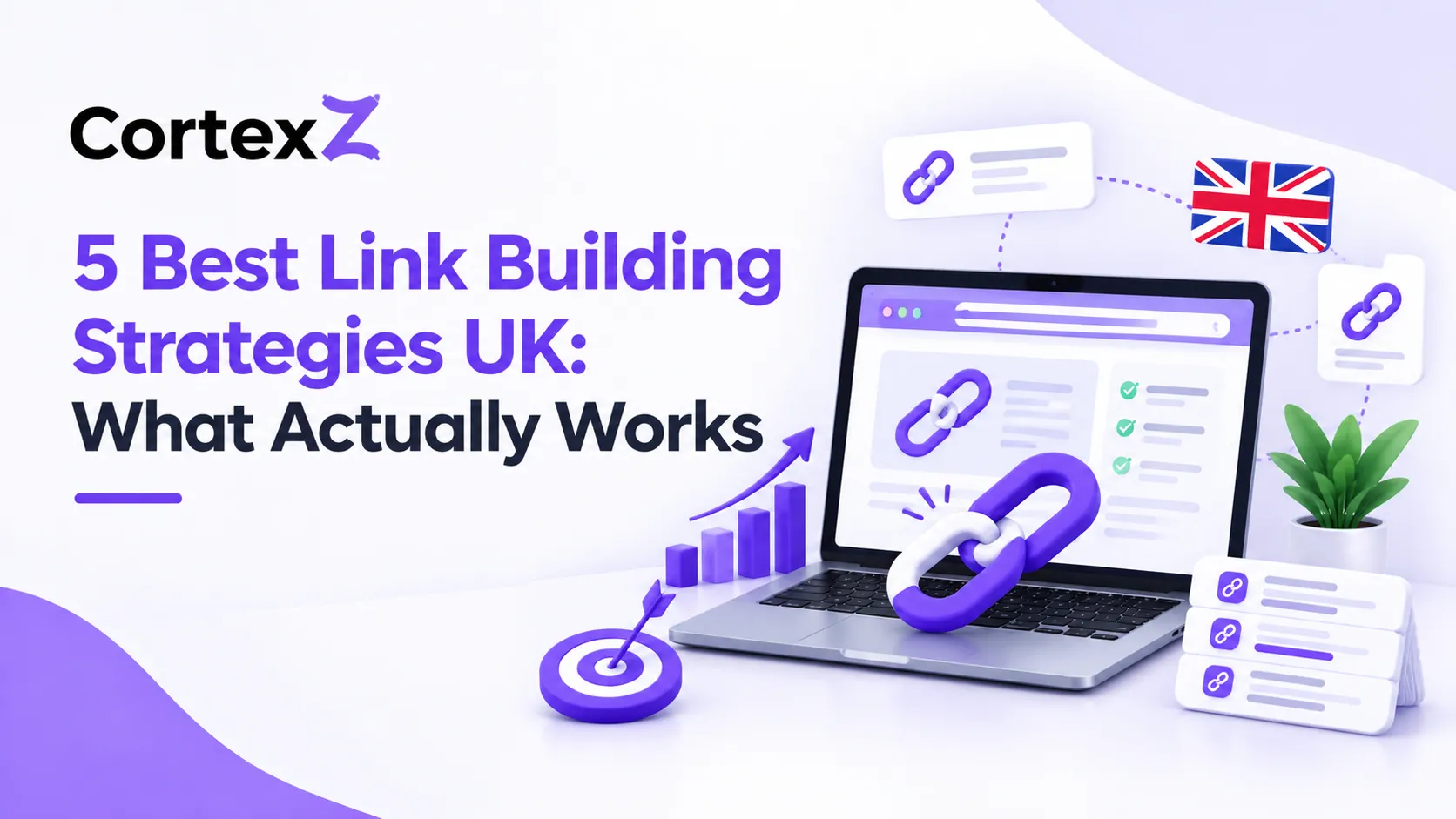
Backlinks remain one of the strongest ranking signals Google uses, yet many UK businesses still get link building wrong. Some buy cheap links from spammy networks. Others give up entirely, thinking links only matter for huge brands. Neither approach works well.
The right link building strategies UK businesses can use are simpler than most people think. They focus on earning links naturally, from real, relevant websites, rather than chasing shortcuts. This guide walks through the methods that actually move rankings, and the ones worth avoiding.
Why Link Building Still Matters in 2026
Google uses backlinks as a trust signal. When a respected website links to yours, it tells Google that other people vouch for your content. The more relevant and trustworthy those links are, the more weight they carry.
This matters even more for UK businesses competing in crowded markets. Two websites can have similar content, but the one with stronger, more relevant backlinks usually ranks higher. Link building will not fix a weak website on its own, but paired with good content, it can be the difference between page one and page three.
It is worth noting that quality always beats quantity here. Ten links from trusted, relevant UK sites will do more for your rankings than a hundred links from random, unrelated blogs.
5 Best Link Building Strategies You Use in the UK
Digital PR and Newsworthy Content
Digital PR has become one of the most effective link-building strategies UK brands use today. It involves creating genuinely newsworthy content, then pitching it to journalists and publications who might want to cover it.
This could be original research, a survey of UK consumers, or a data-driven report on trends in your industry. Journalists are always looking for fresh angles, and a well-timed, relevant story can earn links from major news sites in a single day.
The key is making the content genuinely useful or interesting, not just a thinly disguised advert. A boring press release about a product launch rarely earns coverage. A surprising statistic or a timely opinion piece often does.
Guest Posting on Relevant UK Sites
Guest posting still works when done properly. It involves writing an original article for another website in your industry, usually with a link back to your own site included naturally within the content.
The trick is choosing quality over quantity. One guest post on a respected, relevant UK site is worth far more than ten posts on low-quality blogs that exist only to sell links. Look for sites with real readers, active social accounts, and content that matches your industry.
Reach out with a genuine pitch rather than a generic template. Mention a specific article you liked on their site, then suggest a topic that would add real value to their readers, not just a place to drop your link.
Building Local Citations and Partnerships
For UK businesses with a physical presence or a regional focus, local link building can bring fast, relevant results. This includes listings on directories like Yell or Thomson Local, as well as partnerships with nearby businesses.
A few ideas worth trying:
- Sponsor a local event, sports team, or charity in exchange for a website mention
- Partner with a complementary local business for a joint blog post or promotion
- Join your local Chamber of Commerce, which often includes a member directory link
- Get featured in regional news coverage or business round-ups
These links tend to be easier to earn than national press coverage, and they also support local SEO alongside general rankings.
Creating Link-Worthy Resources
Some content naturally attracts links because it is genuinely useful. Original guides, free tools, templates, and detailed how-to resources tend to earn links over time, without needing constant outreach.
Think about what your industry lacks. If competitors only offer thin, generic content, a detailed and well-researched guide can become the go-to resource other sites link to when covering the same topic. This approach takes longer to pay off than direct outreach, but the links it earns tend to be more natural and longer-lasting.
Reclaiming Lost and Unlinked Mentions
Sometimes your brand gets mentioned online without a link attached. This is called an unlinked mention, and it is one of the easiest wins in link building, since the website already knows and likes your brand.
Set up a simple Google Alert for your brand name, then check periodically for mentions across the web. When you find one without a link, a polite email asking them to add one often works, especially if the mention already reads naturally.
The same applies to broken backlinks. If a site used to link to a page on your site that no longer exists, reaching out to fix or redirect that link can recover lost value.
Strategies to Avoid
Not every link building approach is worth the risk. Buying links in bulk from link farms or private blog networks can lead to a Google penalty that takes months to recover from. Automated link submission tools that spam your URL across thousands of low-quality directories cause similar problems.
Excessive link exchanges, where two sites agree to link to each other purely for SEO gain, can also raise flags if done at scale. A few natural exchanges between genuinely related businesses are fine, but this should never be the main strategy.
How to Track Your Link Building Progress
Building links is only half the job. Tracking their impact tells you what is actually working. Google Search Console shows which sites already link to you, while free or paid backlink checkers can reveal new links as they appear.
Watch for changes in rankings and organic traffic after a new link goes live, especially from high-authority sources. Over time, this helps you understand which strategies bring real results for your specific industry, rather than guessing based on general advice.
Final Thoughts
The most effective link building strategies UK businesses can use all share one thing in common: they focus on earning trust, not gaming a system. Digital PR, smart guest posting, local partnerships, and genuinely useful content all take more effort than buying links, but they build authority that lasts.
Start small, focus on quality over volume, and track what works for your specific market. If you want expert help building a link strategy that fits your business, Cortexz works with UK brands to earn the kind of backlinks that actually move rankings.
Frequently Asked Questions
How many backlinks does a UK website need to rank well?
There is no fixed number. Quality and relevance matter far more than the total count of links.
Is guest posting still effective for link building?
Yes, when done on relevant, quality sites with genuine content, not spammy link-only posts.
How long does link building take to affect rankings?
Most businesses see ranking movement within three to six months of consistent, quality link building.
Are paid links against Google’s rules?
Yes. Buying links that pass ranking value can lead to penalties if Google detects the pattern.
What is the safest link building strategy for beginners?
Local citations and unlinked mention reclaiming, since both are low-risk and simple to start.