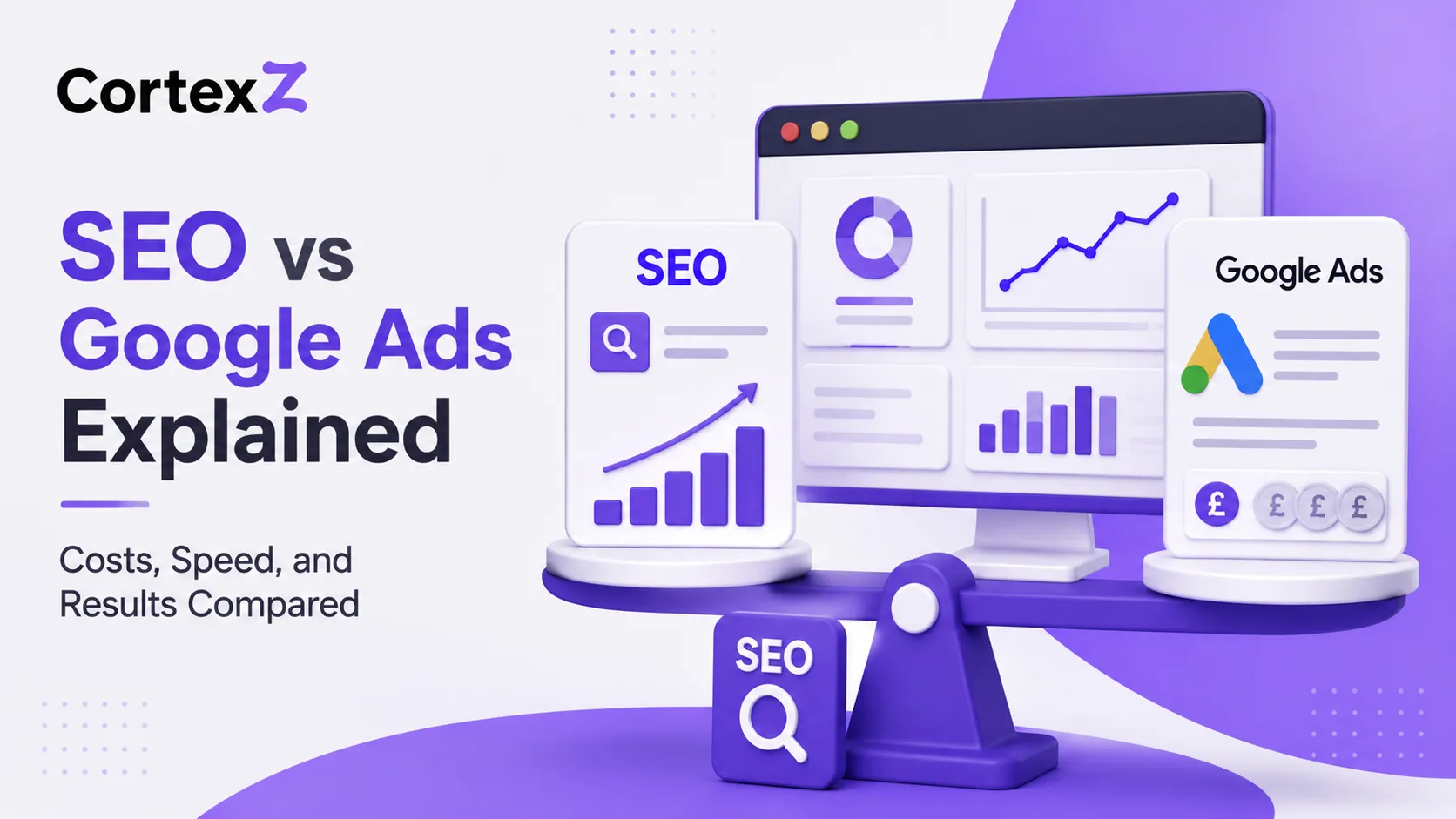
If you want more traffic to your website, you have two main choices. You can use SEO, or you can use Google Ads. Both can bring visitors to your site. But they work in very different ways.
This guide breaks down the costs, speed, and results of each. By the end, you will know which one fits your business best. You might even find that you need both.
What Is SEO?
SEO stands for search engine optimization. It is the process of making your website show up in Google’s free search results. These are called “organic” results.
To rank well, you need good content. You also need the right keywords, a fast website, and links from other trusted sites. Google looks at all of these things. It uses them to decide which pages deserve the top spots.
SEO is not a quick fix. It is more like planting a garden. You put in the work now, and you get results later. But once your site ranks, it can bring in traffic for months or years without extra spending.
What Is Google Ads?
Google Ads is a paid advertising platform. You bid on keywords. When someone searches for that keyword, your ad can appear at the top of the page. You pay each time someone clicks your ad. This is called pay-per-click, or PPC.
Google Ads gives you control. You choose your budget. You choose your keywords. You choose when your ads run. And you can turn them on or off at any time.
Unlike SEO, Google Ads does not depend on Google’s ranking algorithm. If you pay enough and write a good ad, you can be at the top of the page today.
SEO vs Google Ads: The Cost Difference
Cost is often the biggest factor in this decision. Let’s compare them side by side.
The Cost of SEO
SEO is not free. You may need to pay for:
- Content writing
- Web Development and speed improvements
- Keyword research tools
- An SEO expert or agency
But here is the key difference. You are not paying for clicks. You are paying for the work that helps your site rank. Once your page ranks well, the traffic keeps coming without extra cost per visitor.
Over time, this can make SEO cheaper than ads. Many businesses see their cost per visitor drop each month as their rankings improve.
The Cost of Google Ads
With Google Ads, you pay for every single click. Some keywords cost a few cents. Others, especially in competitive industries like law or insurance, can cost $50 or more per click.
The moment you stop paying, your ads disappear. Your traffic drops to zero right away. There is no lasting value once the budget runs out.
This makes Google Ads more expensive in the long run, especially for businesses that need steady traffic every month.
SEO vs Google Ads: The Speed Difference
Speed is where these two strategies look the most different.
How Fast Is SEO?
SEO takes time. It is common to wait three to six months before seeing real movement in rankings. Some competitive keywords can take a year or longer.
This is because Google needs to trust your website. It checks your content, your links, and your user experience. A site built on solid Software Development practices tends to earn that trust faster, since it loads quickly and works well on every device. This trust builds slowly.
If you need traffic right now, SEO alone will not be fast enough.
How Fast Is Google Ads?
Google Ads is nearly instant. You can set up a campaign today and get clicks within hours. This makes it perfect for:
- Product launches, especially for eCommerce stores running a new sale
- Time-sensitive sales
- Testing new keywords or offers
- Filling gaps while SEO is still growing
If speed is your top priority, Google Ads wins easily.
SEO vs Google Ads: The Results Difference
Cost and speed matter, but results are what really count. Let’s look at how each option performs over time.
Long-Term Results With SEO
SEO builds a lasting asset. A well-ranked page can keep bringing in traffic for years. You do not pay per visitor, so your return on investment often improves over time.
SEO also builds trust. Studies show that many users trust organic results more than paid ads. People often skip the “Ad” label and click on regular search listings instead.
The catch is that SEO results are not guaranteed. Google’s algorithm changes often. Rankings can shift without warning.
Short-Term Results With Google Ads
Google Ads gives you fast, measurable results. You can see exactly how many clicks, calls, or sales came from each ad. This makes it easy to test what works.
However, the results stop the moment you stop paying. There is no lasting traffic once your budget ends. This makes Google Ads better for short bursts of traffic than long-term growth.
Which One Should You Choose?
The right choice depends on your goals, budget, and timeline.
Choose SEO If You:
- Want long-term, sustainable traffic
- Have time to wait for results
- Want to build trust and authority
- Have a smaller ongoing budget
Choose Google Ads If You:
- Need traffic right away
- Are launching a new product or offer
- Want to test keywords before committing to SEO
- Have budget for ongoing ad spend
Why Not Use Both?
Many successful businesses use SEO and Google Ads together. Ads bring in traffic while SEO grows in the background. Once your organic rankings improve, you can reduce ad spend and rely more on free traffic.
This combined strategy gives you the best of both worlds. You get fast results now and lasting growth later.
Key Differences at a Glance
Here is a simple summary of what we covered:
- Cost: SEO has upfront work costs but no cost per click. Google Ads charges for every click, which can add up fast.
- Speed: SEO takes months to show results. Google Ads works within hours.
- Results: SEO builds long-term traffic and trust. Google Ads gives short-term, controlled results.
- Best use: SEO is best for long-term growth. Google Ads is best for quick wins and testing.
Final Thoughts
SEO and Google Ads are not enemies. They are tools. Each one solves a different problem.
If you want steady, long-term traffic without paying per click, focus on SEO. If you need fast results and have a budget for ads, Google Ads is the better fit.
For most businesses, the smartest move is to use both. Start ads to get traffic now. Build SEO at the same time so you have lasting results later. This balanced approach reduces risk and helps your business grow in both the short term and the long term.
Frequently Asked Questions
1. Is SEO better than Google Ads?
Neither one is better on its own. SEO is better for long-term, low-cost traffic. Google Ads is better for fast, short-term results. The best choice depends on your goals and timeline.
2. How long does it take to see results from SEO?
Most websites start to see noticeable results in three to six months. Highly competitive keywords can take a year or more. Results also depend on your website’s age, content quality, and links.
3. Is Google Ads worth it for small businesses?
Yes, if used carefully. Google Ads can bring fast traffic and sales. Small businesses should start with a small budget, test different keywords, and track results closely before spending more.
4. Can I stop Google Ads and keep the traffic I built?
No. Once you stop paying, your ads stop showing right away. There is no leftover traffic like there is with SEO. This is why many businesses build SEO for long-term stability.
5. Should I invest in SEO or Google Ads first?
If you need traffic quickly, start with Google Ads. If you have time and want to save money in the long run, start with SEO. Many experts recommend doing both at the same time for faster and more lasting results.